
Climate Hackathon
The Deployment Dilemma


Are you ready to address the most pressing issues around Net Zero for UK Plc?
The Oxford Climate, Impact and Sustainability OBN has created a set of hackathon challenges for you to tackle for a cash prize.
Over one week your team will work virtually to research, evaluate, and innovate, crafting a pitch to deliver to a panel of expert judges. You work will be supported by a NetZero mentor from the alumni and expert UK business school community.
Get ready to compete against your fellow MBAs across Said Business School, London Business School, Warwick Business School and Cambridge Judge Business School to deliver the winning pitch!

Choose a challenge
The UK has legally binding Net Zero targets, but we are hitting a wall. We don’t lack technology, we lack the business models to deploy it at scale. Your challenge is not to invent a new gadget. It is to invent a new mechanism. Design a business model, financial instrument, or policy-backed venture that unlocks the deployment of clean technology in the UK market.
There are three challenges to choose from:
Challenge 1
Designing a new business model - "The Flexibility Challenge" centred around the grid, and the bottleneck for connecting renewables projects.
Challenge 2
Creating a financial instrument - "Scope 3 Supply Chain" looking at business emissions, and how B2B platforms or financial incentive structures can clean up supply chains.
Challenge 3
Structuring a policy-backed ventured - "Retrofit Revolution" focusing on energy efficiency in the built environment, and how a fintech solution can power residential decarbonisation.
How does the hackathon work?
Firstly, select your teams of between four and six students to work on the hackathon, and register at the link below. You will choose which track you wish to work on and be assigned a mentor to work with you during the hackathon.
- The hackathon will run for one week
Friday 20 February - Friday 27 February - There will be a virtual launch event at 2pm on Friday 20 February to meet the judges and spend an hour with your mentor to agree support schedules and deliverables
- We come back together on the afternoon of Friday 27 February to hear the pitches and decide a winner
Deadlines
- Monday 26 January: Registration opens
- Monday 16 February: Registration deadline
- Wednesday 18 February: Teams announced and full challenge published
- Friday 20 February: Launch event (virtual)
- Friday 27 February: Final event (virtual)
Judges panel
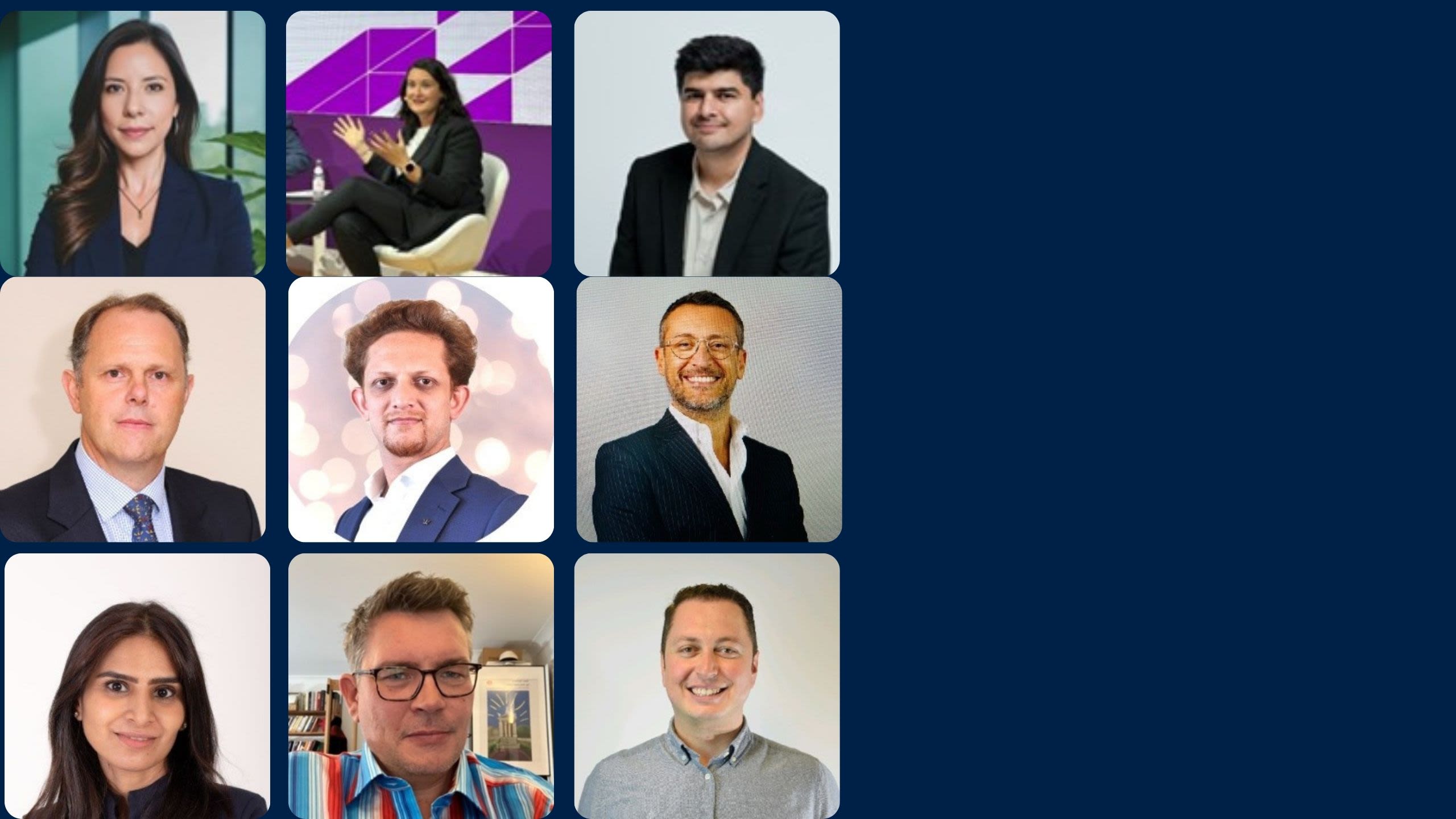
Robert Clews (MBA 2009) Head of UK and Western Europe, Bechtel Enterprises . Leading energy and natural resources project finance together with infrastructure, real estate and shipping/marine for Bechtel’s project finance and development business. Robert has deep expertise in capital raising for large, complex and multi-sourced/multi-national projects as a banker, advisor, consultant and in industry.
Smiti Mehra (EMBA S22) Project Manager for Hydrogen Manufacturing at Stegra. Responsible for delivering hydrogen to Europe's first new steel mill in more than 50 years. Smiti’s experience in the energy sector spans Leadership, Management, Business and Technical roles. Smiti has worked globally in long term international assignments & various Operated & Non Operated Ventures in the US, Europe, Middle East and Asia, as well as NOCs, NGOs, Venture Partners, governments & banking institutions (WB & Asian Development Banks).
Fabrizio Siracusano Innovation and Ventures Investments Lead at Adnoc Group leading on the end-to-end deal process within Low Carbon Solutions and International Growth newly established Directorate at HQ level. Fabrizio is a business-savvy and creative senior manager with decades of holistic experience in new business development, investments aimed to organic/inorganic growth, corporate strategy, P&L management.
Gediz Karaca (MBA 2017) is Co-Founder and former CEO at start-up Odqa, a renewable energy generating Oxford spinout, now Board Member.

The mentors
Dora Gutierrez (LBS EMBA alumna) Founder at Snova, a cutting-edge innovative start-up using modern molecular biology to deliver high-performance, cost-effective insulation biomaterials for architects and developers, using agricultural and agri-industry waste. Dora has deep experience in growing business especially in emerging markets through giants like Amazon and ABinBev in senior strategy and supply chain roles. She holds an MBA from LBS -Columbia University.
Justine Roure (LBS EMBA alumna) Justine is the VP Strategy & Policy at OGCI. Her works includes coordinating actions and commitments from the companies, external stakeholders management and setting strategic direction for OGCI. She focuses notably on scaling up low carbon solutions of the industry. She has 15 years of experience in climate change and sustainability, working at strategic and operational levels on setting and implementing climate and low-carbon strategies.
Ray Rajarshi (MBA 2021) is Climate Subject Matter Expert at SLB, an energy tech company. Ray provides strategic advisory services on risk assessment and mitigation aligned with leading sustainability standards through a suite of ESG integration tools. His focus is on transition risk due diligence, mitigation pathway design, partnership structuring, and revenue-enabling transformation strategies, particularly for hard-to-abate industries.
Peter Spark (PG Diploma in Financial Strategy 2017) is a low carbon new venture strategy consultant with deep skills in market analysis, opportunity identification with financial and carbon accounting, project assessment, project management and portfolio analysis.
Yash Tripathy (LBS EMBA alumnus) is a solutions engineer for Voltaiq, an enterprise battery intelligence platform for developing, producing, and optimizing batteries and battery-powered products. Yash leads enterprise solutions and product-led GTM initiatives, owning customer discovery, solution design, account-based positioning, and adoption across complex, multi-region customers. performance metrics, catch issues early, and trace problems to their source, using existing data.
Contact and FAQ
FAQs
Who is eligible to be on the teams?
- The hackathon is open to full time MBA students at Said Business School University of Oxford, London Business School, Warwick Business School and Cambridge Judge Business School.
Who will be mentoring the students?
- Your mentor will be assigned to you, from a talent pool of climate experts across the networks of these business schools.
How will the mentoring work?
- Following the launch presentation, you will be given up to an hour with your mentor in a breakout room to agree how you would like to schedule contact and review appointments as you put together your pitch. This is a flexible arrangement determined by you and your mentor to mutual convenience.
What do the students need to produce at the end of the hackathon?
1. The Pitch Deck (10 Slides): Problem, Solution, Market, Team.
2. The Financial Model: Unit economics and revenue logic.
3. Deployment Roadmap: Setting out how to build from 0 to 100 users in the UK in 12 months.
How will the pitches be judged?
The pitches will be judged across the following four criteria:
1. Commercial Viability (40%): Is this a business or a charity? Does the math work?
2. Impact Potential (30%): Scale of CO2 reduction or energy efficiency.
3. Feasibility (20%): Can this work within UK regulations?
4. Innovation (10%): Novelty of the financing or engagement model.



Contact
Contact the Oxford Saïd hackathon lead Madeleine Paler at madeleine.paler@sbs.ox.ac.uk if you would like further information.
 Built with Shorthand